
TL;DR
RepCard, Popl, Mobilo, and Linq keep showing up in the same search results, but only one of them is built for canvassing. Popl, Mobilo, and Linq are digital business cards that share contact info at the door and that's it. RepCard runs the canvassing operation behind the card too: rep activity tracking, lead history during migrations, and integrations with ServiceTitan, HubSpot, and the home services tools that actually run the business.
By Brad Mortensen | Founder and CEO of RepCard
TL;DR: RepCard, Popl, Mobilo, and Linq keep showing up in the same search results, but only one of them is built for canvassing. Popl, Mobilo, and Linq are digital business cards. They share contact info at the door and that's it. RepCard runs the canvassing operation behind the card too: rep activity tracking, lead history during migrations, integrations with ServiceTitan, HubSpot, and the home services tools that actually run the business. If you knock doors for solar, roofing, HVAC, pest control, or fiber, this isn't a four-way race. It's one tool for your workflow next to three built for trade shows.
RepCard vs Popl, Mobilo, Linq at a glance
The four don't solve the same problem, which is what most comparison posts get wrong. Here's how it actually breaks down for D2D teams.
| Capability | RepCard | Popl | Mobilo | Linq |
|---|---|---|---|---|
| Built for door-to-door canvassing | Yes | No | No | No |
| Digital business card at the door | Yes | Yes | Yes | Yes |
| Pin-drop territory mapping | Yes | No | No | No |
| Rep activity tracking and leaderboards | Yes | Limited | Limited | Limited |
| Lead history preserved during migration | Yes | N/A | N/A | N/A |
| Automated follow-up texts and emails | Yes | Limited | Limited | Limited |
| Integrations with ServiceTitan, JobNimbus, FieldRoutes | Yes | No | No | No |
| Native integrations with HubSpot and Salesforce | Yes | Yes | Yes | Yes |
| Lead disposition workflow at the door | Yes | No | No | No |
| Offline mode for poor cell coverage | Yes | Limited | Limited | Limited |
| Sales rep gamification | Yes | No | No | No |
| Primary user | D2D rep and sales manager | Knowledge worker and networker | Knowledge worker and networker | Knowledge worker and networker |
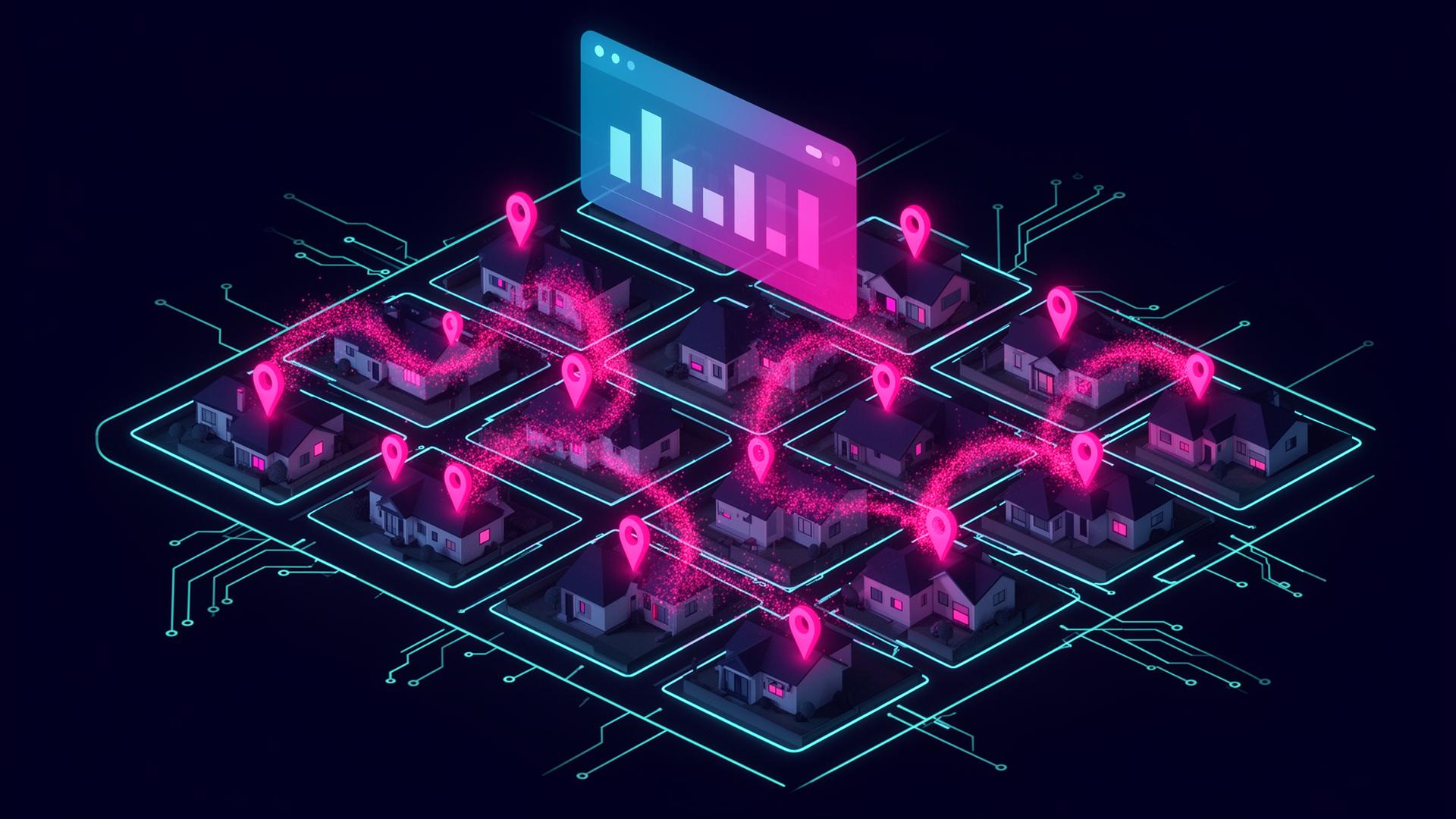
If all you need is contact-sharing, any of the four will do. If you're trying to run an actual canvassing operation, the list gets short fast.
What each platform actually does
What is the best door-to-door sales software in 2026?
The best door-to-door sales software is the one built for canvassing, not bent into shape from a different category. That's RepCard. The platform runs the full D2D cycle: territory pin-drops, lead capture, disposition tracking, rep activity dashboards, automated follow-up, CRM sync. Popl, Mobilo, and Linq are good at the digital business card part. None of them were built to manage a canvassing team. For solar, roofing, HVAC, pest control, and fiber, that's the whole game.
RepCard: built for the door
RepCard is a D2D sales platform that bakes the digital business card into the canvassing operation, not the other way around. Reps share their card at the door. The platform captures the lead. The manager sees activity in real time. Follow-up texts fire automatically based on what actually happened on the doorstep. It's the only one of the four with pin-drop mapping, lead history that survives a migration, and direct integrations with home services CRMs.
The reason RepCard exists is what happens to most home services teams around 10 to 20 reps. Spreadsheets break. Generic CRMs don't capture activity. Digital business card apps don't know what a territory is. Reps end up running three or four tools at once, none of them talking to each other. RepCard collapses that stack.
Popl: a digital business card with sales add-ons
Popl is a digital business card with NFC, QR codes, and a mobile app. It's a great fit for networking events, conferences, and anyone who needs a clean way to hand off contact info. They've layered on CRM integrations and lead capture over time, but the product is still a card at its core. No territory mapping. No lead disposition. No dashboard a manager can run a canvassing team from.
If your reps mostly hand off contact info at trade shows, Popl does that job well. The moment you need to know which streets got covered yesterday and what came back from each door, you're using the wrong tool.
Mobilo: NFC-based contact sharing
Mobilo is built the same way Popl is. NFC chip in a physical card. App to manage it. LinkedIn and HubSpot sync. The whole product centers on the moment you hand the card over, and after that, Mobilo's job is basically done. It wasn't designed to run the day-to-day of a canvassing team, and it doesn't.
A sales engineer at a B2B SaaS company collecting cards at trade shows will love Mobilo. A solar team pinning 400 homes per rep per week is using the wrong category of tool.
Linq: card-first, lightweight CRM
Linq pairs the digital business card with some light CRM and lead capture. The roadmap has been moving toward sales teams for a while, but contact sharing is still the foundation. There's no offline territory map. No D2D-specific disposition flow. No real-time view of where your reps are or what they're doing.
For an individual rep or a 1-3 person team that wants something nicer than paper, Linq holds up fine. A roofing company running 30 reps across two cities will outgrow it inside a month.
Why people search "RepCard vs Popl vs Mobilo vs Linq" in the first place
Which field sales software works best for door-to-door teams?
Door-to-door teams need software that handles two jobs at once: a clean professional handoff at the door, and a full canvassing operation behind it. RepCard is built for that combination. Popl, Mobilo, and Linq are good at the handoff and stop there. SalesRabbit, SPOTIO, and the other territory-mapping tools run the canvassing operation but don't give reps a polished card to share at the door. The reason teams end up searching all four names at once is they're trying to solve both problems with one tool.
Home services teams running this search have usually figured out something the listicles haven't. A digital business card on its own isn't a sales platform, and a territory map on its own isn't a relationship tool. They want both in one place, and that's the real product question hiding under the brand-name search.
The hidden cost: tool sprawl
Most home services teams running Popl, Mobilo, or Linq are also paying for a separate canvassing tool, a separate CRM, and usually a separate texting platform. The average rep already runs eight different tools to close deals, and 72% of sellers say they're overwhelmed by the stack, per a Gartner survey of 1,026 sellers published in September 2024. Sellers buried in tools are 45% less likely to hit quota.
For a 30-rep solar team, the math gets ugly fast. Digital business card at $10 to $15 per rep. Canvassing tool at $25 to $40 per rep. CRM at $50 to $100 per rep. Texting platform on top of all that. Call it $120 per rep per month at the low end, which works out to $43,000 a year before anyone knocks a single door. And reps are still bouncing between four apps to do their job.
The cognitive cost is worse than the dollar cost. A Harvard Business Review study of Fortune 500 workers found people toggle between apps roughly 1,200 times a day, losing about 9% of their work time just reorienting. For a D2D rep, that's the difference between 80 doors knocked and 88. Salesforce State of Sales data shows reps spend only 28 to 30% of their week actually selling. The rest is admin, tool-switching, and reconciliation. Consolidating onto one platform built for D2D doesn't just save money. It hands reps back hours of selling time.
What integrations actually matter for D2D
What integrations does door-to-door sales software need to work with my existing tools?
Door-to-door sales software has to talk to the tools that actually run a home services business: ServiceTitan for HVAC and plumbing, JobNimbus for roofing, FieldRoutes for pest control, plus Salesforce or HubSpot if there's a broader customer pipeline. SMS and email for follow-up. Calendar sync for booked appointments. A clean API for whatever custom stuff comes up. Digital business card platforms usually integrate with HubSpot, Salesforce, and LinkedIn. They don't integrate with home services operational systems, which is where almost all D2D revenue ends up flowing through.
Here's what teams figure out the hard way after they buy a digital business card platform expecting it to run their D2D operation. The moment a lead converts, it has to land in the system that books the job, dispatches the tech, sends the invoice, tracks the warranty. That system is ServiceTitan, JobNimbus, or FieldRoutes. If your sales tool can't talk to your service tool, every lead is a manual handoff. Manual handoffs are where deals die.
RepCard plugs directly into the home services platforms. Popl, Mobilo, and Linq don't. That's not a feature gap. It's a category gap.
Migration: what happens to your leads when you switch?
What happens to my leads if I switch from one canvassing app to another?
When you switch canvassing apps, what happens to your leads comes down to the new platform's migration process. Most digital business card platforms don't even have one, because they aren't storing the kind of activity history a canvassing operation builds up. Most canvassing tools assume you're starting from scratch and offer light data import at best. RepCard built a structured migration path because home services teams kept telling us this was the single biggest reason they wouldn't switch. They couldn't stomach losing six months of rep activity, lead notes, and territory history. The RepCard migration brings over leads, contact info, activity logs, disposition history, and rep performance data.
Most teams underestimate what that history is worth. Six months of activity is the difference between a rep walking into a territory cold and a rep who knows the house at 1247 Maple St said no in March because they were waiting on a quote from another contractor. That context closes deals. Losing it sets a team back months.
If a vendor can't tell you exactly how they migrate your lead history, you already have the answer. You'll lose it.
How each platform tracks rep performance
What's the best way to track canvassing activity for solar sales reps?
The best way to track canvassing activity for solar sales reps is software that captures every door knock automatically, ties it to a rep and a territory, and rolls up into a dashboard the manager can read in real time. That takes three things most platforms don't have together: GPS-anchored pin-drops at every door, lead disposition workflows that fire from the rep's phone, and an activity feed the manager can filter by rep, territory, or time. RepCard captures all three natively because the platform was built for it. Popl, Mobilo, and Linq track card taps and contact shares, not door knocks or dispositions or territories. For solar teams running D2D, that gap is the whole reason to evaluate the category in the first place.
A roofing manager running 15 reps across two cities doesn't care how many times each rep tapped their phone yesterday. The manager needs to know:
- Which streets got covered this week
- Which leads are warm and need follow-up by Friday
- Which reps are hitting daily activity targets and which ones are coasting
- What disposition rates look like (knocked, not home, not interested, set appointment, closed)
- Where the territory boundaries are, and whether reps are stepping on each other
That's a canvassing operations problem. RepCard was built around it. It's not what Popl, Mobilo, or Linq exist to solve.
When you should pick each one
Pick RepCard if you're running a home services D2D team in solar, roofing, HVAC, pest control, or fiber, especially once you're past 10 reps. The platform consolidates digital business card, canvassing tracking, lead history, automated follow-up, and CRM sync into one tool.
Popl makes more sense for teams that mostly do networking, B2B field sales calls, or conference handoffs, where the digital business card is the actual product and territory mapping doesn't apply.
Mobilo is in the same lane as Popl. If you're stuck choosing between the two, that's a different comparison and feature parity is high. For a D2D home services team, the answer to "Popl or Mobilo" is neither, because the category is wrong.
Linq works for an individual rep or a 1-3 person team that wants something nicer than a paper card and doesn't need canvassing operations underneath. The product is solid for what it is. It just isn't a canvassing platform.
The Booma Effect on tool stack decisions
There's a principle behind everything we build at RepCard: what you put out into the world comes back to you. We call it the Booma Effect. It applies to door-to-door selling and it applies to picking software.
Teams that grab the cheapest tool that solves one problem usually pay three times over later in tool sprawl, lost data, and rep time. Teams that pick the right tool for the actual workflow, even if it costs more on day one, end up with reps who sell more and stay longer.
The shortcut on a D2D software decision is almost never the shortcut. The home services teams growing fastest in 2026 didn't pick a tool repurposed from a different category. They picked a platform built for what they actually do.
Ready to consolidate your D2D stack onto one platform built for home services? Book a RepCard demo and see how teams running solar, roofing, HVAC, and pest control are running their entire canvassing operation in one place.
Key Takeaways
- 1Popl, Mobilo, and Linq are digital business cards; only RepCard also runs full sales operations.
- 2RepCard is the only one of the four with pin-drop territory mapping, rep activity dashboards, and lead disposition workflows.
- 3RepCard integrates directly with ServiceTitan, JobNimbus, and FieldRoutes; the other three do not.
- 4A typical home services D2D stack (card + canvassing + CRM + texting) runs ~$120 per rep per month before consolidation.
- 5Migration matters: RepCard preserves leads, activity logs, dispositions, and rep performance history from previous systems.
Frequently Asked Questions
The best door-to-door sales software is the one built for canvassing from the ground up. For home services teams in solar, roofing, HVAC, pest control, or fiber, that's RepCard. The platform runs the full D2D cycle in one place: territory pin-drops, lead capture, disposition tracking, rep activity dashboards, automated follow-up, and CRM sync. Generic field sales tools and digital business card platforms each handle a piece of it, but only D2D-native software runs the whole operation.
Field sales software for D2D teams has to do two jobs at once: a clean handoff at the door, and the canvassing operation behind it. RepCard does both. Contact-sharing tools (Popl, Mobilo, Linq) cover the handoff and stop there. Territory-mapping tools cover the operation but leave reps with no professional way to share contact info on the doorstep. Once a team is past 10 reps and the tool stack starts costing real money, that gap matters.
D2D sales software for home services needs to plug straight into the operational systems that run the business: ServiceTitan, JobNimbus, FieldRoutes, plus general CRMs like HubSpot and Salesforce. SMS and email for follow-up. Calendar sync for booked appointments. Digital business card platforms usually integrate with HubSpot, Salesforce, and LinkedIn, but not with home services operational platforms, which is where lead-to-job handoff actually happens.
The leads usually transfer if you export them, but the activity history often doesn't. Most canvassing platforms don't have a structured migration path for lead notes, disposition history, or rep performance data. Before signing with a new vendor, ask exactly how they migrate the full activity log behind each lead, not just contacts. RepCard built a structured migration process specifically to bring that history across, because losing six months of context is the single biggest cost most teams hit when they switch.
You need three things in one platform: GPS-anchored pin-drops at every door, lead disposition workflows the rep fires from their phone, and a real-time activity feed the manager can filter by rep, territory, and time. Without all three, the manager is guessing. RepCard captures all three natively because the platform was built for the workflow. Digital business card platforms track card taps, not door knocks or dispositions, which means they can't answer the questions a solar sales manager actually needs answered.
RepCard includes a digital business card and uses it as the handoff at the door, but the platform is a lot more than that. It also runs the canvassing operation behind the card: pin-drop territory mapping, lead disposition tracking, rep activity dashboards, automated follow-up texts and emails, and direct integrations with home services CRMs. That's the structural difference from Popl, Mobilo, and Linq, which are digital business card platforms with light CRM features bolted on.
Per-rep pricing for RepCard runs higher than a basic Popl, Mobilo, or Linq subscription on its own, because RepCard replaces three to four tools. For most home services teams, the total stack cost (digital card plus canvassing tool plus CRM plus texting platform) lands well above what RepCard charges on its own. The comparison that actually matters isn't card-to-card pricing, it's total-stack cost.
Related RepCard Features
Related Articles

The Four Pillars of a Sales Operating System
A Sales Operating System unifies recruiting, training, selling, and marketing for field sales teams. See why fragmented tool stacks cost you reps.
Read more
Best Digital Business Card Platforms in 2026
We evaluated 9 digital business card platforms on sharing, analytics, CRM, and team management. See which fits your team in 2026.
Read more
7 Best SPOTIO Alternatives for D2D Sales Teams in 2026
SPOTIO is a strong field sales platform, but it's not the only option. Compare 7 alternatives ranked by what D2D sales managers actually need in 2026.
Read more