TL;DR
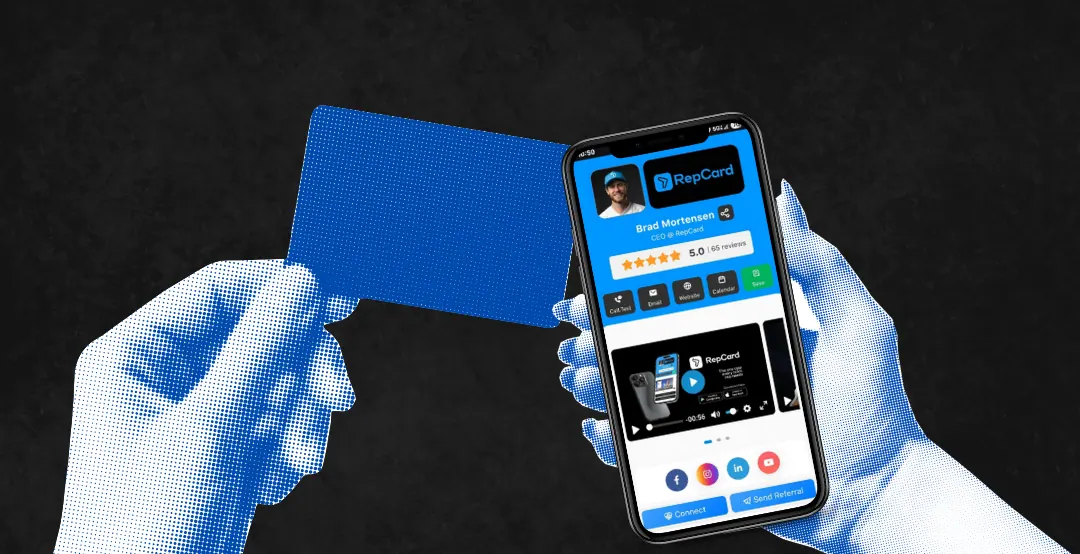
Digital business cards replace paper's instant-trash fate with an automated follow-up machine. Your rep hands over a card, the prospect opens it, you get notified in real time, they auto-enroll in your text/email campaign, and hot prospects get flagged for priority follow-up, all without your rep leaving the driveway. For D2D teams knocking 50-70 doors a day, it's the difference between hoping someone calls back and knowing who's hot within the hour.
Table of contents
- The paper business card problem: specific to field sales
- Benefit 1: your cards don't end up in the trash
- Benefit 2: digital cards convert 16% more prospects than paper
- Benefit 3: you get notified the instant a prospect engages
- Benefit 4: auto-enroll prospects into your follow-up campaign automatically
- Benefit 5: hot contacts flag high-intent prospects the moment they engage
- Benefit 6: speed to follow-up makes a real conversation 7x more likely
- Benefit 7: stop losing 9% of your rep's day to app-toggling
- Benefit 8: reclaim time your reps are already losing to admin
- Benefit 9: zero manual data entry: capture real lead data at the door
- Benefit 10: NFC + QR + text + email: four ways to share, one platform
- Benefit 11: team analytics without the CRM hassle
- Benefit 12: built-in review and referral prompts: close the loop without asking twice
- Benefit 13: professional branding every interaction: build credibility at the door
- Benefit 14: you're staying ahead of the market shift
- How to move your team from paper to digital: without the chaos
- Start seeing real results from your digital cards
The paper business card problem: specific to field sales
Paper business cards are a classic rep tool. They're also a dead end.
88% of paper business cards are discarded within a week. For a D2D rep, that's even worse: most of the time, it's in the trash before they reach the next block.
This isn't a networking event problem. A conference attendee might keep a card for weeks. A homeowner who just said "thanks" and closed the door? They don't keep it. No middle ground. Either they act immediately or they throw it away.
The follow-up gap is where everything falls apart. If the prospect doesn't text or call within the first 24 hours, the rep has no way to know they're interested. No engagement signal. No record. Just silence and a lost deal.
Digital cards close that gap. Let's walk through how.
Benefit 1: your cards don't end up in the trash
Paper cards have an 88% failure rate. Digital cards don't.
A rep hands over a card at a door. The prospect says "thanks" and closes the door. Ninety-nine percent of the time, the prospect either loses the card or throws it away within a week. Digital cards live in the prospect's pocket forever: it's just a link or a scan. The card never gets lost because it's not physical. RepCard sees a similar pattern in its own product data: 85% of paper cards get discarded within a week, close to the market-wide 88% figure above.
Picture a roofing rep handing over a card during a free inspection. The homeowner slides it into a stack of mail. By the time they're ready to get quotes three weeks later, the card is gone. With a digital card, the rep text-shares it or the prospect scans the NFC-enabled card on the rep's phone. It's saved to their phone forever. No loss. No excuse.
Benefit 2: digital cards convert 16% more prospects than paper
Recipients of digital cards are measurably more likely to become customers.
A rep's job is conversion, not just contact creation. Digital card recipients are 16% more likely to become customers than paper-card recipients. That's not marginal; that's a real multiplier. Friction removal is baked in: no handwriting name and number, no risk of losing the card, instant link to more info.
For a solar rep, the job is moving a homeowner from "interested" to "schedule a consultation." Imagine a solar rep's digital card linking directly to the company's service photos, customer testimonials, and an easy scheduling button. That gap closes faster. The 16% difference is real. It shows up in closes.
Benefit 3: you get notified the instant a prospect engages
Real-time notifications alert the rep immediately when a prospect opens, views, or interacts with their card.
The rep knocks a door at 10 AM. They'll knock 50+ more doors that day. At 2 PM, the prospect finally has time to look up the company. The rep needs to know right then, not eight hours later in a report. A notification on the rep's phone means they can call back that afternoon while the prospect is hot, not the next morning when interest has cooled.
Imagine an HVAC rep handing over a digital card at a service call. The prospect opens it at 3 PM to check warranty info. The rep gets a notification on their phone immediately. They call at 3:15 PM to offer a free estimate before the prospect forgets. The close rate improves because timing is everything.
"I get notified instantly when a prospect has opened my RepCard link, even if I sent it to them weeks ago. This gives me a chance to reach out to them right away." (Al4567, App Store review, February 4, 2023)
Benefit 4: auto-enroll prospects into your follow-up campaign automatically
Sending a digital business card can auto-enroll the contact into a text and email campaign, so follow-up starts without the rep doing anything.
Manual follow-up is the failure point in D2D. Reps knock 50-70 doors a day. If they have to manually text or email each one, it doesn't happen. Automatic enrollment means the rep sends the card and the campaign takes over.
Picture a pest control rep finishing a service visit. They hand over a digital card that auto-enrolls the prospect into a three-email sequence. The sequence explains the company's prevention plan, includes a referral incentive, and requests a review. The rep doesn't lift a finger. Seven days later, the prospect books a second service because of the automation. This is impossible with paper cards.
"Built-in cadences mean instant follow-up after knocking, without paying another vendor. RepCard just works." (Michael Claeys, Energy Consultant, LGCY Power)
Benefit 5: hot contacts flag high-intent prospects the moment they engage
When a prospect opens the card or watches a video, they're automatically flagged as "Hot Contacts" in the mobile app, pulling real-time notifications simultaneously.
Not all prospects are equally hot. A rep needs to prioritize. If the rep gets a real-time notification and then sees the prospect auto-flagged as a Hot Contact, they know this isn't an idle peek. This person is engaged. The rep can then segment their callback list: hot contacts first, warm contacts in 24 hours, cold callbacks later.
Imagine a fiber installer hands over digital cards at 50 doors one day. That evening, eight prospects have opened the card and watched the product video. Those eight are flagged as Hot Contacts. The rep prioritizes them for the next morning's callback round. All eight schedule calls within 48 hours. Without Hot Contacts, the rep would cold-call all 50 prospects in random order.
Benefit 6: speed to follow-up makes a real conversation 7x more likely
Contacting a lead within an hour makes a rep 7 times more likely to have a meaningful conversation with a key decision maker than waiting even one hour longer.
This is what actually drives a real conversation with the person who can say yes. According to research from HBR and LeanData, based on a study of 2,241 companies, firms that contacted leads within an hour were seven times more likely to have a meaningful conversation with a key decision maker than those who waited even one hour longer. A D2D rep can't wait until end of day or the next day. By then, the prospect has moved on. Real-time notifications on a digital card mean a rep can be back at their truck making a call within minutes of the prospect opening the card, well inside that one-hour window.
Picture a roofing or solar rep doing an inspection. The rep sends a digital card. The prospect opens it at 4 PM. The rep gets a notification, sees they're marked Hot Contact, and calls at 4:03 PM, minutes later, not an hour later. They have a real conversation about repair options. The rep books a quote appointment. That's the exact behavior the research rewards: responding within the hour instead of waiting makes a real, decision-maker conversation seven times more likely than a callback the next day.
Benefit 7: stop losing 9% of your rep's day to app-toggling
Your reps toggle between apps roughly 1,200 times a day, losing about 9% of their total work time to reorienting and context-switching.
Research from Harvard Business Review found that workers lose approximately 9% of work time switching between tools and reorienting themselves. For a rep working a 10-hour field day, that's substantial wasted time. If your digital card system is built into the platform your reps already use for CRM, lead tracking, and real-time notifications, you don't add a new app. They don't toggle more. That 9% of their time (which was going into app-switching chaos) stays in their pocket.
Imagine an HVAC rep without integration. They use the scheduling app to check the day's calls, toggle to email to follow up a proposal, toggle to a text app to confirm arrival time, toggle to a note app to log details, toggle back to the scheduling app to mark the call complete. Repeat this cycle 1,200 times a day. With a consolidated platform, they launch it once and all of it lives there. The context-switching stops.
Benefit 8: reclaim time your reps are already losing to admin
The average rep spends less than a third of their time actually selling.
HubSpot data cited by Xactly shows this across field sales organizations. The rest is admin, data entry, manual follow-up, and tool juggling. If digital cards are part of a single platform that handles follow-up campaigns, real-time notifications, and lead scoring, manual follow-up stops eating time. A team that can send a card, auto-enroll the prospect, and get notified when they engage (all in one motion) eliminates hours of manual follow-up work.
Imagine a pest control rep who currently spends three hours of their eight-hour day on admin: manually logging calls, typing notes, scheduling follow-ups, copying contact info into email templates. A digital-card-first workflow cuts that closer to 30 minutes. That's roughly two and a half hours a day free for actual selling instead of paperwork. The time isn't theoretical; it's time they're already losing to busy work instead of selling.
Benefit 9: zero manual data entry: capture real lead data at the door
Digital cards eliminate illegible handwritten notes, smudged phone numbers, and lost contact info.
Paper cards and hastily scribbled notes are the origin of bad data. A digital card pulls clean contact data into the system automatically: name, phone, email. No re-keying. No ambiguous handwriting. No lost cards. The core contact info is captured once, at the door, and it's never hand-copied a second time back at the office.
Picture a solar rep sitting with a homeowner, discussing roof orientation and energy bills. Instead of scribbling contact details on a paper notepad that has to get re-typed later, the rep shares the digital card and the contact info syncs automatically: name, phone, email, no re-entry required. Later, the proposal is generated from clean, complete contact data instead of the sales engineer trying to decipher chicken scratch on a lost notepad.
Benefit 10: NFC + QR + text + email: four ways to share, one platform
A rep can share a digital card via NFC tap, QR code scan, SMS, direct link, or email, all from one card, one platform.
Different prospects prefer different methods. Some have iPhones (NFC), some Android (QR). Some prefer text, some email. A single digital card works in all contexts. No reprinting. No "I left my cards in the truck" moments.
Imagine a roofing rep pulling out a branded NFC card (no ink, reusable). One homeowner taps it with their iPhone (NFC). Another homeowner has an older Android, so the rep pulls up the QR code on their phone. A third says "just text it to me." All three reach the same digital card, same company info, same follow-up campaign. Zero friction.
Benefit 11: team analytics without the CRM hassle
Centralized visibility into who's sending cards, how many are opened, and which reps are converting, without forcing the team into a bloated traditional platform.
Managers need visibility. They need to know which reps are actually sending cards, which cards get opened, and which open rates convert. RepCard delivers team analytics by rep and by team, all in the mobile app where reps already work. Reps use it in the field because it's designed for field workflow, not some desktop CRM nobody touches.
Picture a fiber deployment manager watching the digital card analytics dashboard. Rep A sent 47 cards today, 18 opened (38% open rate), 5 marked Hot Contacts. Rep B sent 23 cards, 11 opened (48% open rate), 8 Hot Contacts. Without saying a word, the manager sees that Rep B's approach is converting better. The manager shows both reps the data and aligns the team on Rep B's strategy next week.
Benefit 12: built-in review and referral prompts: close the loop without asking twice
Digital cards can include prompts that ask for reviews and referrals automatically, right in the interface.
Asking for a review or referral is awkward. Reps often skip it. When it's a natural part of the digital card interface (a simple tap or button), the rep doesn't have to ask verbally. The prospect's contact info is already captured, so follow-up is instant.
Imagine a pest control rep finishing a service visit and handing over a digital card. The card includes a button: "Did we do a great job? Leave a review or share with a neighbor." No verbal ask needed. The prospect taps, leaves a 5-star review, and shares the card with a neighbor. Two weeks later, that neighbor books a service. The review loop is closed before the rep leaves the driveway.
Benefit 13: professional branding every interaction: build credibility at the door
Digital cards can be branded with the company logo, colors, and messaging. Every share is a branded impression.
A paper card is generic or bland. A digital card is sleek, professional, and branded. When a prospect shares the card with a neighbor, the company's branding goes with it: organic marketing. Branded cards also signal that the company is modern and professional, which increases trust on the doorstep.
Imagine a solar rep handing over a branded NFC card with the company logo in full color, a modern design, and the company's sustainability messaging built in. The homeowner is immediately impressed. This isn't a small operation; it's a legit company. The digital card reinforces that impression every time the homeowner opens it.
Benefit 14: you're staying ahead of the market shift
Digital business card adoption is growing at 12.2% annually, with the global market projected to reach USD 680.19 million by 2035.
Adoption is accelerating. Companies and reps that adopt early have a 1-3 year advantage over competitors still using paper. This isn't speculative; it's a macro trend with institutional research backing it. A team that waits two more years to adopt digital cards will be behind.
The roofing, solar, HVAC, pest control, and fiber markets are all becoming more competitive. Early adopters of digital cards are already closing 16% more deals. Companies that wait will be playing catch-up against reps who already have the data, the habits, and the conversion playbooks dialed in.
How to move your team from paper to digital: without the chaos
Switching tools is hard. Here's why it actually isn't.
Sending a digital card is easier than handing over a paper one. Zero training required. Most reps pick it up in the first day. Card creation takes under five minutes. Show reps the mobile app. That's it. They already use it.
Real-time notifications start arriving immediately, which motivates adoption faster than any training deck. Within a week, reps see the difference: more callback interest, better data, less manual follow-up. They become converts on their own.
Imagine a roofing company switching their 15-person team to digital cards on a Monday. By Wednesday, three reps have closed deals from improved callback response rates. By Friday, the whole team is asking why they didn't switch sooner.
RepCard's own data shows 3.6 million digital cards distributed and 160,000+ reps using the platform, proof that adoption isn't theoretical; it's happening at scale right now.
Start seeing real results from your digital cards
Digital cards aren't a gimmick. They're the difference between an 88% chance a prospect forgets you and a card that stays in their pocket, notifies you when they engage, and starts following up before you've reached the next door.
That's not a small edge over paper. It's a different way of running the whole follow-up motion.
Your team's probably already giving away paper cards. Why not make them count. Book a demo to see how digital cards work in action, or start free and see it for yourself.
For more on field sales strategy, read our follow-up masterclass for D2D teams and explore lead management and Hot Contacts in the field.
Key Takeaways
- 188% of paper cards get discarded within a week; digital cards live in the prospect's pocket
- 2Digital card recipients are 16% more likely to become customers than paper-card recipients
- 3Real-time notifications let reps call back the same hour, making a real conversation 7x more likely
- 4Auto-enrollment into text and email campaigns starts follow-up before the rep reaches the next door
- 5Hot Contacts flag high-intent prospects so reps prioritize the right callbacks first
Frequently Asked Questions
A digital business card is a shareable digital profile that a rep sends by NFC tap, QR code, text, or email instead of handing over paper. Once a prospect opens it at the door, their contact info syncs automatically, the rep gets a real-time notification, and follow-up starts without the rep doing anything else.
Yes. Digital card recipients are 16% more likely to become customers than people who get a paper card, largely because 88% of paper business cards get thrown away within a week while a digital card stays on the prospect's phone and keeps working long after the rep leaves the driveway.
Yes. Contact info syncs automatically into your CRM or data system via native integration or Zapier, so nothing gets re-keyed by hand. Engagement tracking is also built in, broken out by rep and by team.
Sending a digital business card can auto-enroll the prospect directly into a text and email campaign, so the sequence starts the moment the rep taps send. The rep doesn't have to remember a callback later that night, the follow-up is already running before they reach the next door.
Auto-enrollment into your text and email campaign starts the moment the rep sends the card, so the prospect keeps hearing from you even if they never open it. They don't have to remember to click a link, the follow-up already started on its own.
Yes. Real-time analytics show how many cards each rep sent, how many were opened, and which prospects got flagged as Hot Contacts, broken out by rep or by team. A manager can see whose approach is converting without waiting on an end-of-week report.
A digital card takes about the same few minutes to send as handing over a paper one, so the real savings show up after the visit, when the rep isn't manually logging contact info or chasing lost details by hand. Across 50-70 doors a day, cutting that manual step out adds up to real hours back in the field.
No. An NFC-enabled card works with any modern smartphone, and sharing by QR code, direct link, or text needs no extra equipment beyond the platform your team already has. RepCard runs on both iOS and Android, the same as any other app on a rep's phone.
There's no separate cost for the cards themselves. Digital cards are included in the same mobile app your reps already use for lead management and real-time notifications, with pricing starting at Free for an individual card or Starter at $24 per user per month for a team.
Resistance typically clears up within the first week once reps see real-time notifications firing the moment a prospect opens their card and callbacks start landing faster. Showing them their own open-rate and Hot Contact numbers usually converts them faster than just telling them it's better.
Related RepCard Features
Related Articles
Sales follow-up strategy for door-to-door teams (2026)
Speed to lead, not touch count, decides whether door-to-door deals close. A modern D2D follow-up cadence, the real research behind response time, and how to track whether your reps actually run it.
Read more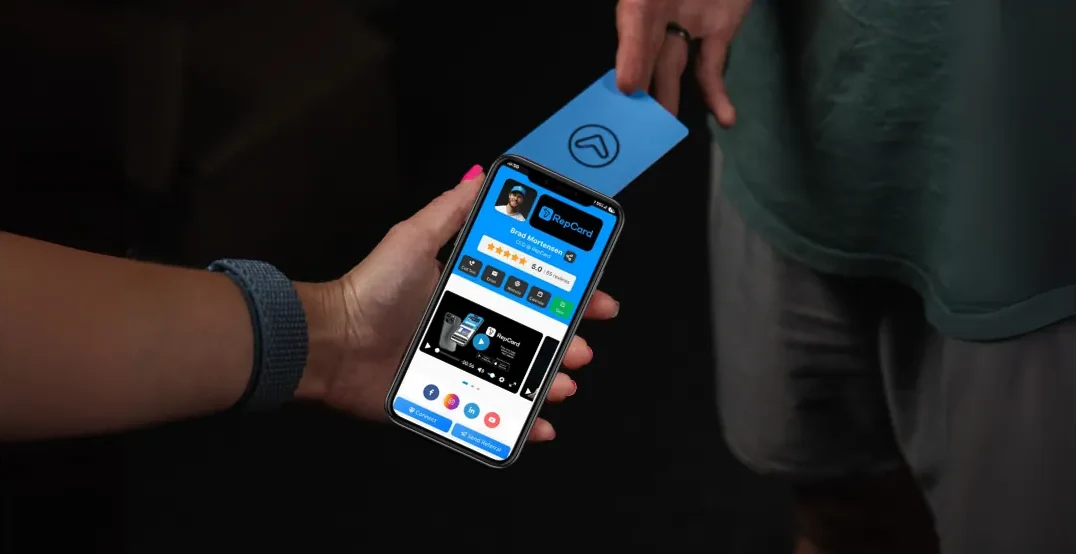
Best Digital Business Card Platforms in 2026
We evaluated 9 digital business card platforms on sharing, analytics, CRM, and team management. See which fits your team in 2026.
Read more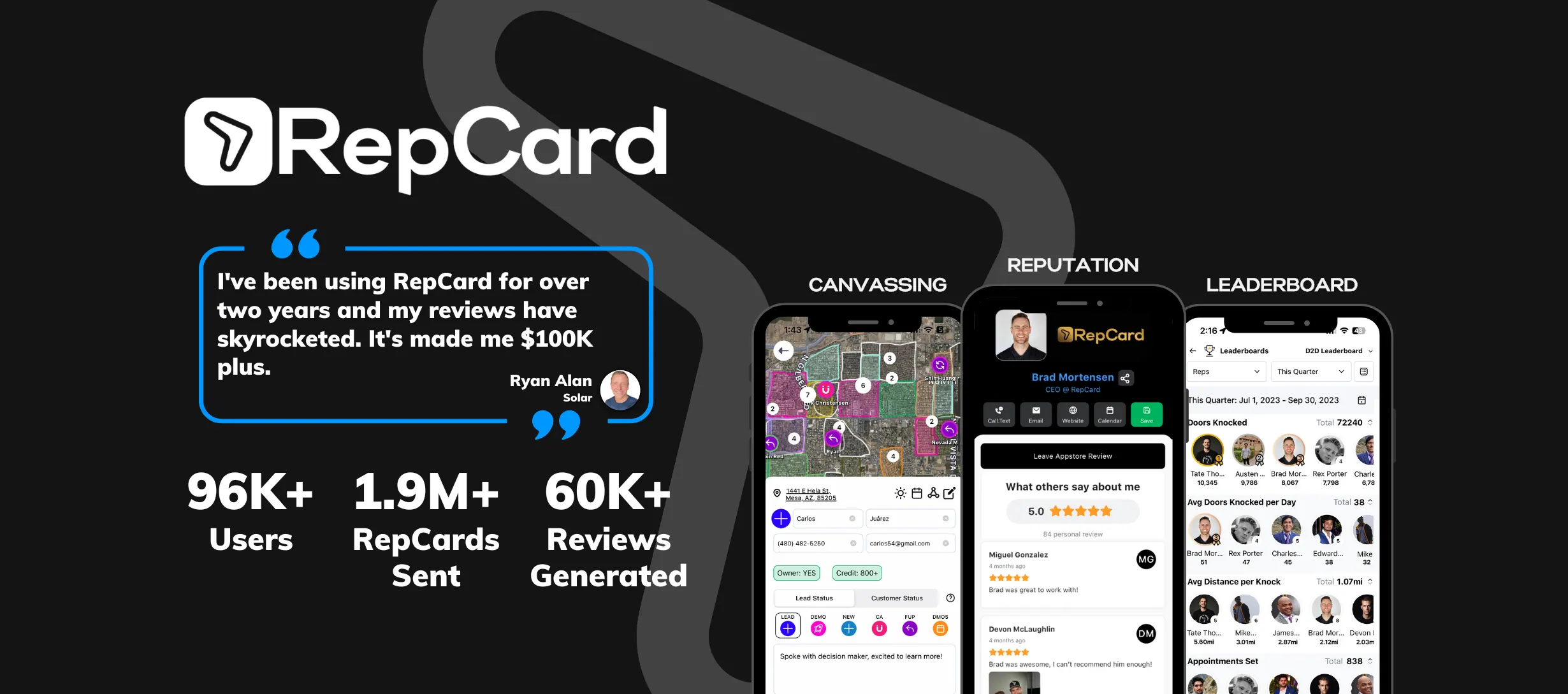
The Best Digital Business Card App
Looking for the best digital business card app? This comprehensive guide breaks down what to look for and why RepCard leads the pack for sales professionals.
Read more